
Home › Blog › Surf Camp Morocco: Everything You Need to Know
A surf camp in Morocco gives you a bed, a board, a wetsuit and daily coaching in one booking, usually from three nights, on a coast that keeps working through the European winter. You surf in the morning, you do something Moroccan in the afternoon, and someone else reads the forecast so you do not have to. This guide walks through the seasons, what is actually included, the levels, and the landing at Agadir, so you can picture the week before you book.
We run a surf camp Morocco setup in Taghazout, so the examples here come from how we do it. The rules of the coast are the same for everyone.
Why the Atlantic coast works when Europe goes cold
The pull of a surf camp Morocco trip in autumn and winter is simple. The Atlantic keeps sending swell while the water stays wearable. Around Taghazout the sea sits roughly between 17 and 21°C across the year, coldest in February and warmest in late summer (seatemperature.net). You surf in a wetsuit, not a drysuit, in December.
That combination is why the region fills up from October to April. The storms out in the Atlantic are far enough north to send clean lines down to the Moroccan coast without the freezing air that comes with them in France or Portugal.
Morocco as a whole has been getting busier. Tourist numbers hit a record last year, and more visitors means more flights and more beds, which is good news for anyone trying to get here off season.
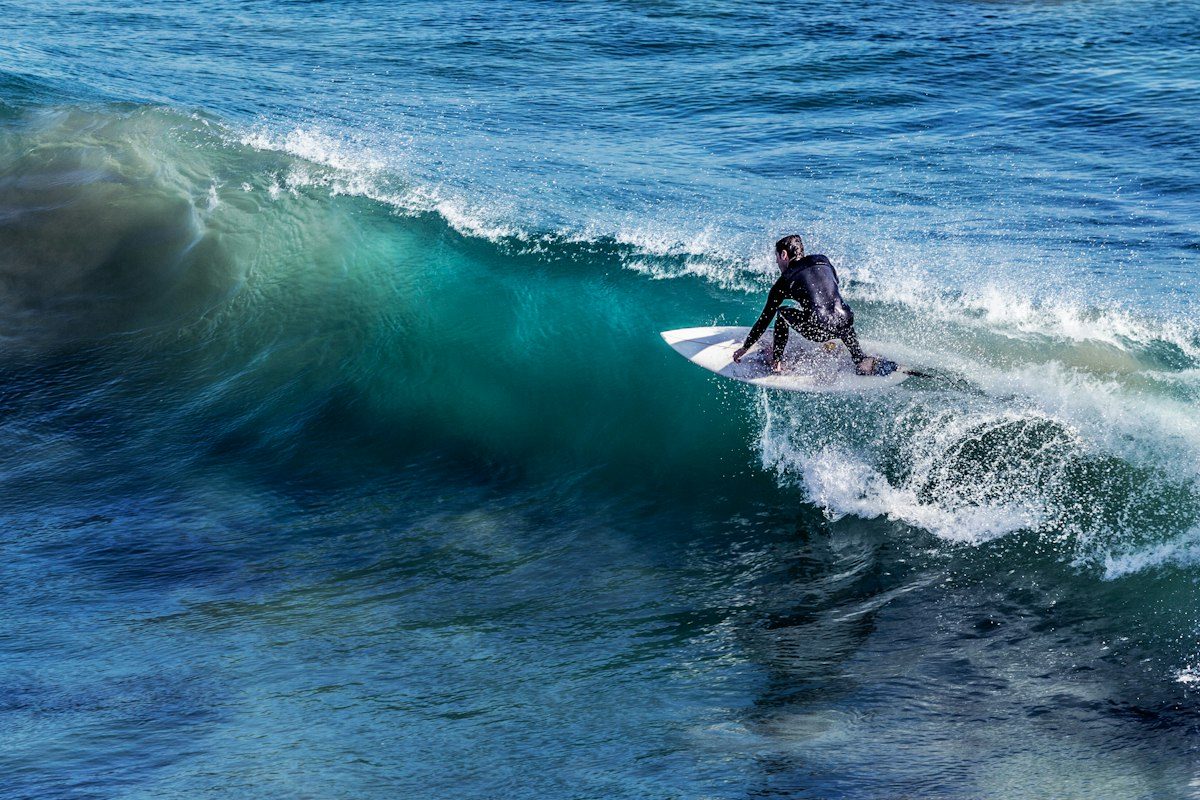
The sun helps too. Winter days in the south are often dry and warm on land even when the water has an edge to it. You can finish a morning session and sit on a rooftop in a t-shirt. For a fuller breakdown of swell by month, see our guide to the best time of year to surf in Taghazout.
What a surf camp Morocco package actually includes
A surf camp bundles the things you would otherwise book one by one: a place to sleep, the gear, the coaching, the food, and getting you to the right beach. The point is that you turn up with a bag and the week is already built. What varies is where the lines are drawn, so it pays to read the small print.
Here is what sits in the package with us.
- Accommodation across four addresses in Taghazout, from a hostel bed to a private studio, all under one team and one booking.
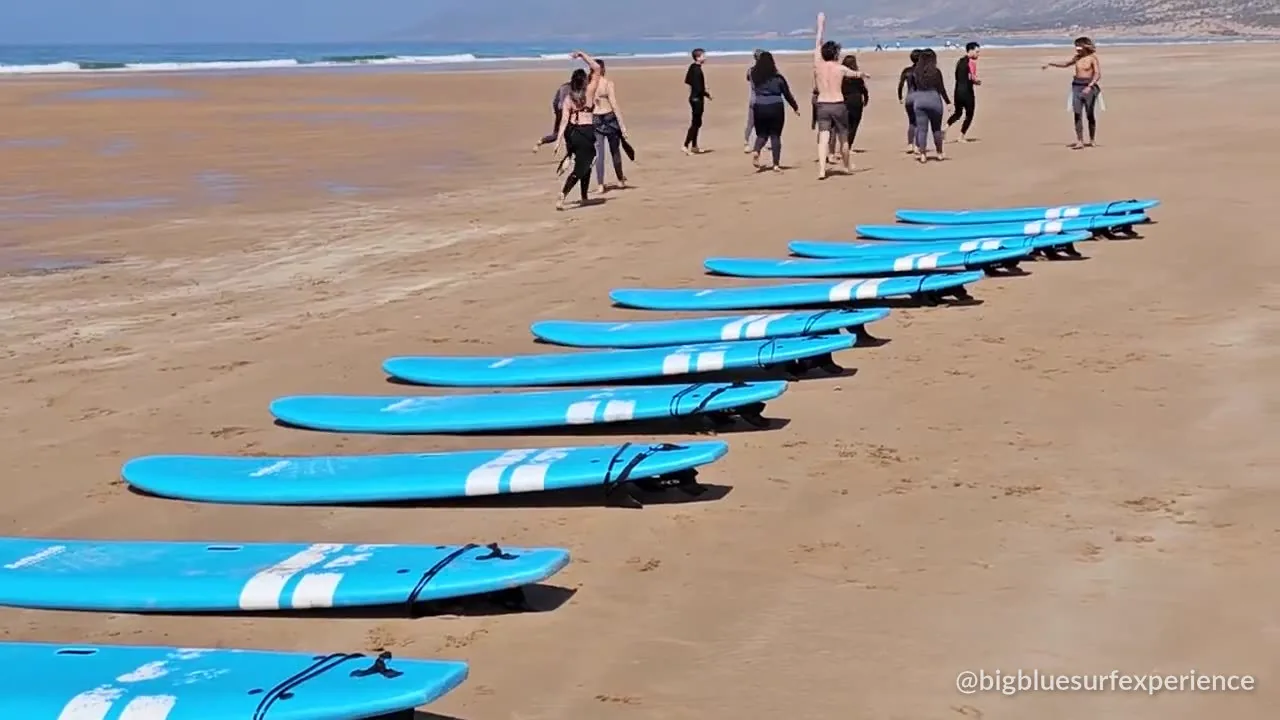
- Board and wetsuit for your sessions, matched to your level.
- Coaching in groups of eight maximum per certified coach, split into beginner and intermediate.
- Transport to the spot. The coach picks the beach each morning from the forecast, and there are eight breaks within reach.
- Breakfast, included on packages and on direct bookings.
- A fixed seven day activity cycle, the same every week, covering quad rides, Paradise Valley, the souk, a hammam, the dunes and more.
What is not automatically in the box is just as worth knowing. Lunches and dinners beyond breakfast depend on the package you pick. The arrival transfer is not included. The Complimentary Departure Transfer, to Agadir Al Massira Airport or Agadir Bus Station, is included from five nights on packaged trips. Watching from the edge with a coffee is also a legitimate activity, and it costs nothing.
You can take the ready made packages or build your own week from the same parts.
The spot changes, because the ocean changes
No surf camp can promise you a specific wave on a specific day, and the honest ones do not try. The ocean decides. What a good camp can promise is a decision made for you: you find out at breakfast which of the eight nearby breaks suits the swell, the wind and your level that morning.
That daily choice matters more than the brochure photo of a perfect point. A beach break with gentle whitewater is the right call for a first timer on a day when the famous right hander is throwing head high barrels. On another morning the roles flip. Splitting by level, beginner and intermediate, and capping groups at eight means the coach is in the water with you, not shouting from the sand.
The breaks themselves range from mellow beaches to long rides, and each one wants something different from you.
Levels, from never surfed to chasing the open face
You do not need any experience to book a surf camp Morocco week. The whole system is built to take someone who has never stood on a board and get them riding whitewater by day three or four, while keeping intermediates improving on the same trip.
Here is roughly how the levels break down.
Never surfed
You start on a soft foam board in the whitewater, where the wave has already broken. The work is simple and physical: paddle, pop up, find your feet. Sand is slower than water and hurts less, which is why the first lessons happen close to the beach.
Improver
Once you can stand and ride straight, the next job is to turn. You move onto slightly less forgiving boards and start angling along the wave rather than straight to the beach. This is where most people spend a week two or week three.
Intermediate
You can read a wave, catch the unbroken face, and want more of the breaks Taghazout is known for. Coaching shifts from mechanics to positioning, timing and spot selection. The point and reef breaks come into play.
The gap between an intermediate and the people chasing barrels is mostly time in the water and local knowledge, which is exactly what a coach who surfs these breaks every day gives you.
Flights, visas, money and the Agadir landing
Getting to a surf camp Morocco base is more straightforward than most people expect. You fly into Agadir Al Massira Airport, which keeps adding routes as the region grows. From there Taghazout is close: the village sits 19 km north of Agadir, roughly a 30 to 40 minute drive.
On visas, most of our guests walk straight through. Over 60 nationalities, including EU, UK, US, Canadian, Australian and Japanese passport holders, can enter Morocco visa free for up to 90 days (Wikipedia, Visa policy of Morocco). Some nationalities get 30 days or need an electronic authorisation first, so check your own passport before you book flights.
Money is the Moroccan dirham, and it is a closed currency, so you change cash or withdraw from an ATM once you arrive. Card payment is common in Agadir and growing in Taghazout, but carry some dirham for the souk, the small cafes and tips.
Two practical notes on getting from the airport to your bed. The arrival transfer is not included, so you either arrange your own ride in advance or sort it on landing. For getting around once you are settled, a scooter is the local answer. On the way home, the Complimentary Departure Transfer to the airport or bus station is included from five nights on packaged trips.
Picking your week
So you know the shape of it now. A coast that works through the cold months, a package that folds the gear, the coaching and the bed into one price, groups of eight with a coach in the water, and a landing in Agadir that takes well under an hour to turn into a sea view. Add the fixed seven day cycle of afternoons, and the week fills itself in.
Stays and packages can be cancelled free of charge up to seven days before arrival, and services booked on their own up to 48 hours before they start, so there is room to commit before the forecast is certain. If you already know what you want, pick one of the six ready made packages. If you would rather set your own balance of surf and afternoons, build your own week from the same parts and tell us your dates.
Questions people ask
How long is a typical surf camp in Morocco?
Most people come for a week. Surf packages at Bigblue Surf Experience start from three nights, and Stay and Chill or Stay and Work options start from two nights. The seven day activity cycle repeats every week of the year.
Do I need to know how to surf before I come?
No. Groups are split by level and capped at eight people per coach. Beginners start on foam boards in whitewater. Intermediates work on reading the wave and surfing the open face at the reef and point breaks.
What time of year is best to surf in Taghazout?
Autumn to spring brings the most consistent Atlantic swell, which is why it is popular as a warm water escape from the European winter. Summer is smaller and better for beginners. The spot is chosen each morning from the forecast either way.
Do I need a visa for Morocco?
Over 60 nationalities, including EU, UK, US, Canadian and Australian passport holders, can enter visa free for up to 90 days. Check the rules for your own passport before you travel, as some countries get 30 days or need prior authorisation.
Is the airport transfer included?
The arrival transfer is not included. The Complimentary Departure Transfer, to Agadir Al Massira Airport or Agadir Bus Station, is included from five nights on packaged trips. You can arrange your own arrival ride or rent a scooter once you are here.