
Home › Blog › Surf Lessons in Morocco for Beginners
You can stand up on a wave on your first day. That is the honest answer most people searching for surf lessons in Morocco for beginners are looking for, and in Taghazout it happens often. The coast is lined with gentle, sandy beach breaks, the water is warm enough for a wetsuit all year, and a good lesson puts a coach in the water next to you while you learn.
This guide walks through what a first lesson actually looks like, where beginners surf near Taghazout, how to choose between group and private coaching, what gear you get, and how quickly most people progress. Written by the team that runs a surf camp in Taghazout, so you can picture the morning before you land.
What a beginner surf lesson in Morocco looks like, step by step
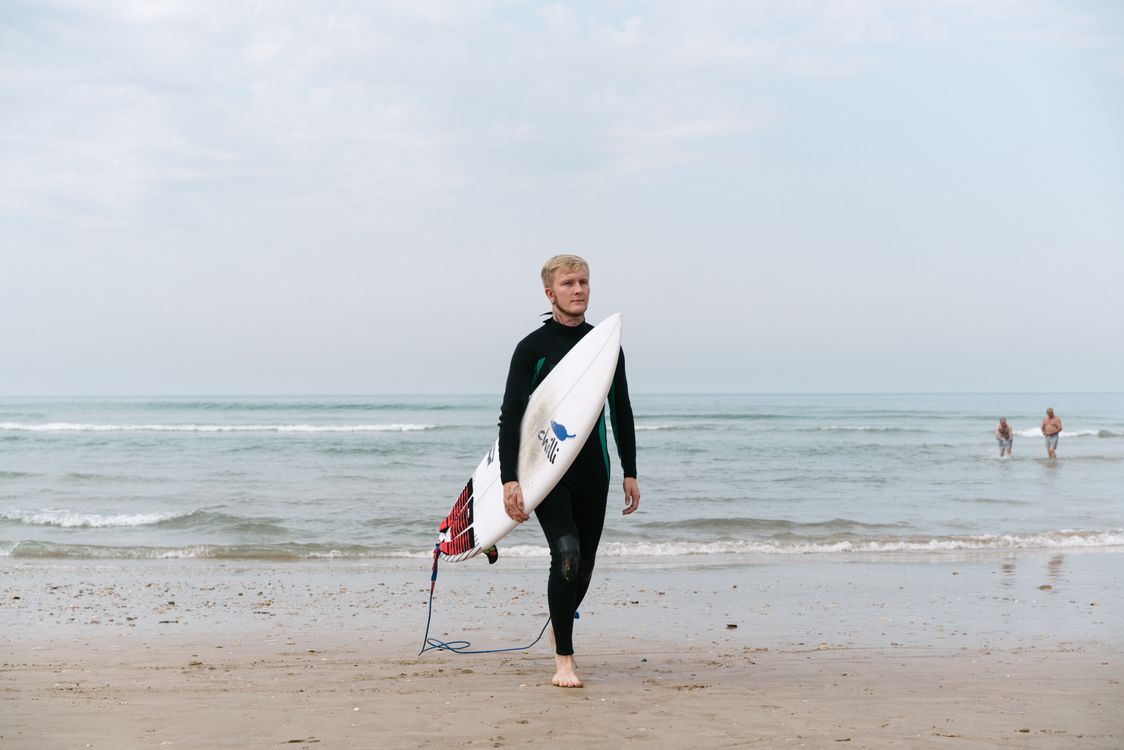
A lesson starts on the sand, not in the sea. The coach reads the conditions, then runs through the basics: where to lie on the board, how to paddle, how to pop up, and where to look when you stand. You practise the pop-up on dry land a few times until the movement feels less foreign.
Then you go in. For beginners, that means whitewater, the foam left after a wave has already broken. It carries you toward the beach with plenty of push and none of the drop of an unbroken wave. The coach is in the water with you, lining you up, telling you when to paddle, and often giving the board a shove at the right moment.
The rhythm is simple and repeats. Paddle out past the shallows, turn, wait for the coach's call, paddle, pop up. Fall. Walk back. Try again. A first session usually runs around two hours in the water, which is enough to catch several waves and tiring enough that your arms will remind you the next morning.
By the end you will have a feel for three things: timing the paddle, the pop-up, and standing in a low, stable stance. None of them are hard on their own. Doing them in sequence while a wave moves under you is the part that takes practice.
Choosing beginner-friendly beach breaks near Taghazout
Taghazout is known for its point breaks, long right-handers that peel over rock and reef. Those are not where you learn. Beginners want sand underfoot and waves that have already broken, which the coast has in good supply.
The spot changes, because the ocean changes. There are eight breaks within reach, and we choose which one to surf each morning from the forecast. You find out at breakfast where you are going. On a small, clean day a beach break might be perfect for first-timers. On a bigger day the coach moves the beginner group to a more sheltered stretch where the whitewater stays friendly.
This is the quiet advantage of learning here rather than at a single fixed beach. When one spot is too big or too messy, we swap the day rather than cancel it. You are never locked into one piece of coast and whatever it happens to be doing.
A few things make a break beginner-friendly: a sandy bottom, a gentle gradient so the water stays shallow for a while, and waves that break softly rather than dumping. Your coach picks for exactly these, which is why the morning spot call matters more than any single famous name.
Group vs private lessons: which is right for you
Most beginners do well in a group, and most beginners enjoy it more. Our surf groups are eight people maximum per certified coach, split by level so beginners surf with beginners. That keeps the coaching relevant to you and the mood light. You share the walk back up the beach, the wipeouts, and the first time someone in the group rides all the way to the sand.
Group lessons suit you if you are travelling solo and want to meet people, if you are on a budget, or if you simply like the social side of learning something new alongside others at the same stage.
Private lessons change the maths. One coach, one surfer, means more feedback per hour and more waves called just for you. Choose a private lesson if you want to progress as fast as possible in a short trip, if you feel nervous in the water and want undivided attention, or if you are a couple or a parent and child who want to learn together at your own pace.
There is no wrong answer. Many people start in a group to find their feet, then book a private session later in the week to iron out one specific thing, usually the pop-up or reading where to sit.
Equipment provided and safety basics
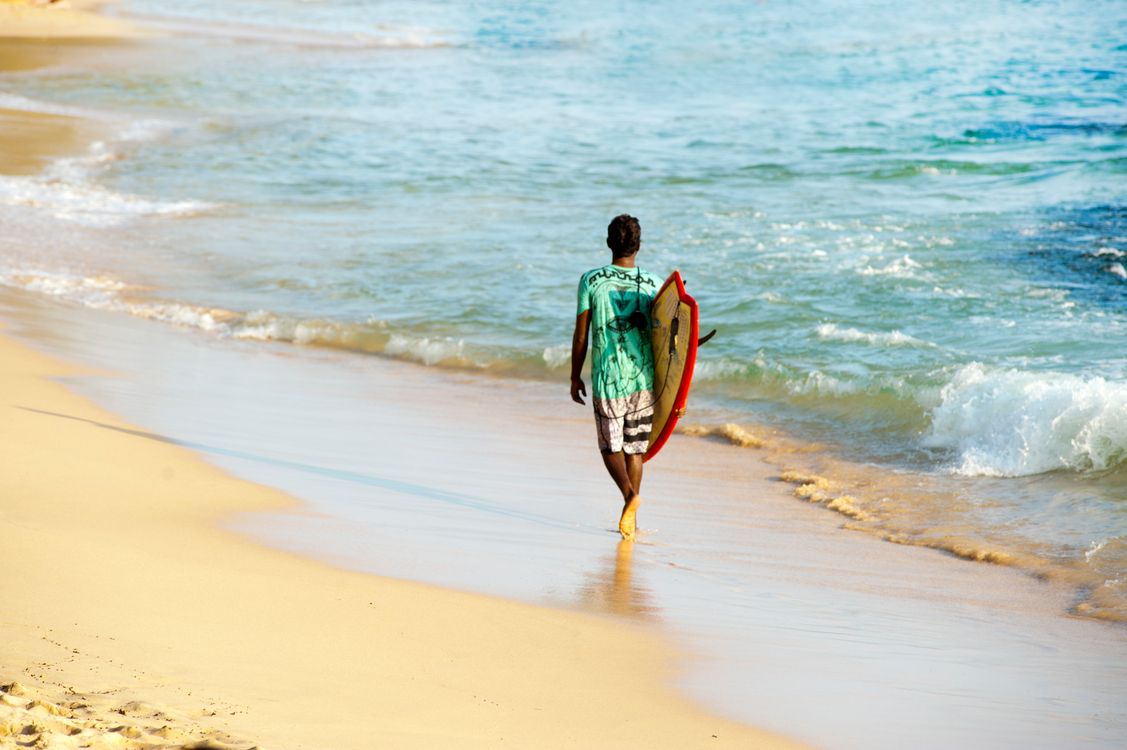
You do not need to own anything to start. Boards, leashes and wetsuits come with the surf lessons, and beginners ride soft-top boards: wide, floaty, and forgiving when they inevitably bump into you. The volume makes paddling and standing far easier than a hard shortboard, which is why nearly everyone learns on one.
What to bring is short. A swimsuit to wear under the wetsuit, sun cream, a towel, and water. Morocco sun is strong even when the air feels mild, so a rash-friendly layer and a reef-safe cream are worth it.
Safety in a beginner lesson is mostly about the setup, and it is mostly handled for you. You stay in water you can stand in. The coach positions you away from other surfers and keeps the group spaced out. The leash keeps your board attached, so it never becomes a loose object in the lineup. The two rules you learn on day one are simple: hold onto your board, and when you fall, come up with your hands over your head to protect it. Sand is slower than water and hurts less, which is another reason beginners stay on the beach breaks.
How fast beginners typically progress
Here is the honest timeline. Most first-timers stand up on a whitewater wave within the first two or three sessions. Standing is the headline moment, and it comes quickly for the majority of people who put in the paddling.
After that, progress slows into something steadier. The next milestones are catching the wave with fewer pushes from the coach, standing without wobbling, and eventually angling along the wave instead of straight at the beach. A week of daily lessons is usually enough to go from your first pop-up to riding green, unbroken waves in small conditions. It is not a promise. It depends on the swell, on how often you surf, and on how hard you are willing to fall.
Fitness helps less than you expect, and comfort in the water helps more. People who swim regularly tend to relax faster, and relaxed surfers learn quicker because they are not fighting the ocean. Watching from the edge with a coffee between sessions is also a legitimate part of the process.
Why Taghazout is ideal for first-time surfers
The weather does a lot of the work. The Agadir region, just down the coast, gets over 300 days of sunshine a year, which means a lesson is rarely rained off and the sea rarely turns grey and hostile. The water is cool enough to need a wetsuit, warm enough that a wetsuit is all you need. You are not shivering through your first lessons the way you might in colder surf regions.
Then there is variety. With several breaks in easy reach and a coast that faces consistent Atlantic swell, there is almost always somewhere working at a size a beginner can handle. The timing of your trip still shapes what you get, so it is worth reading up on the best time of year to surf in Taghazout before you book.
Taghazout is also a surf town that runs on surf. It is small, walkable, and built around the rhythm of the tide, with long tables and rooftops where the day gets replayed over dinner. For a first-timer, that matters more than it sounds. You are surrounded by people learning the same thing, and the whole place assumes you came to get in the water.
If you are weighing up a first surf trip, pick your dates around the season you want, then decide between a group lesson for the social side or a private one to progress faster. Either way, the morning starts the same: coffee, the spot call, and a walk down to the sand.
Questions people ask
Can a complete beginner learn to surf in Morocco?
Yes. Taghazout has gentle, sandy beach breaks that suit first lessons, and coaches start you in whitewater where the waves have already broken. No experience is needed.
How many lessons does it take to stand up?
Most people get to their feet on a whitewater wave within the first two or three sessions. Linking turns and reading the ocean takes longer and comes with repetition.
Do I need to bring my own surfboard or wetsuit?
No. Boards, leashes and wetsuits are provided with the lessons. Bring a swimsuit, sun cream, a towel and water.
Is the water cold in Taghazout?
The sea is cool rather than cold near Agadir, warmest in late summer and coolest in winter, so a wetsuit keeps you comfortable year round.
Group or private lessons for a first time?
Group lessons suit most beginners and are social. Private lessons give you more feedback per hour if you want to progress faster or feel nervous in the water.