
Home › Blog › Taghazout Surf Camp Prices: What to Budget in 2026
A Taghazout surf camp week splits into four costs: your bed, your coaching, your board, and your transfers. Add food, a few excursions and a scooter on top, and you have your real budget. The headline price you see online usually covers the first four. The rest is yours to plan, and that is where most people guess wrong.
So let us price a week the way we would if you called us. Taghazout surf camp prices are easier to compare once you know which blocks a quote includes and which it quietly leaves out. We run four accommodations, one surf school and one booking here in Taghazout, so we see every line on the bill. Here is where the money actually goes.
What a week really costs: the four blocks behind Taghazout surf camp prices
Every surf week is built from the same four parts. Price them one at a time and nothing surprises you. This is what sits behind most Taghazout surf camp prices, whatever the headline figure.
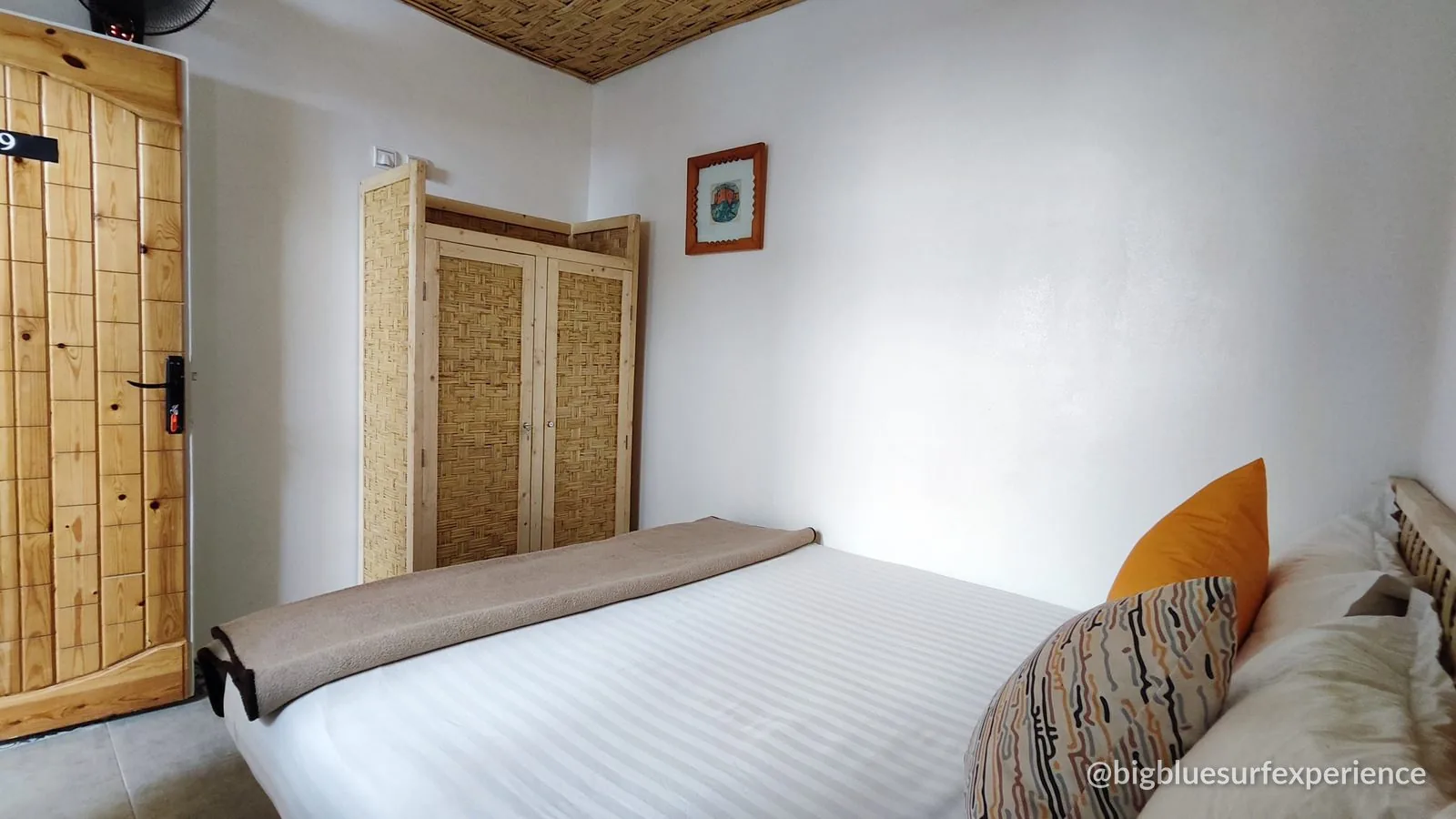
Accommodation. This is your biggest single line. In Taghazout it swings from a hostel bunk to a private studio near the beach, and the gap between them is wide. A dorm bed is social and cheap. A studio buys you a door that closes and a kitchen. What you pay per night depends on the room, the dates and how many of you share it.
Coaching. Surf lessons are the reason most people come. Here that means eight people maximum per certified coach, split by level, and the coach is in the water with you, not shouting from the sand. A package usually includes a set number of coached sessions across the week. If you book coaching on its own, you pay per session or per day.
Board and wetsuit. You do not fly with a board. Rental covers the board and the wetsuit, and in winter you want a 3/2mm because the water sits around 17 to 20C through the main season. On most packages this is bundled in. On a build-your-own stay it is a separate add-on.
Transfers. Agadir Al Massira is the nearest airport, about an hour from Taghazout. On packaged trips from five nights, the Complimentary Departure Transfer to the airport or to Agadir Bus Station is included. The arrival transfer is not, so budget for getting here yourself or add it on.
Package vs build-your-own: where the money goes and where you save
Two ways to book. Both make sense, for different trips.
A package folds the bed, the coaching, the board and a departure transfer into one number. If you want a full week of surf, this is almost always the better value, because you would be paying for each of those pieces anyway and the bundle takes the admin off your plate. You pick your dates, pick a package, and the week is set. We run six ready-made packages, from surf-heavy to the quieter end.
Build-your-own earns its place when your week is not a standard week. Maybe you want three surf mornings and the rest free for excursions. Maybe you are staying twelve nights and only want to surf the first five. Maybe you are a solo traveller who wants the social dorm but only two coached sessions. You pair the pieces yourself and pay for exactly what you use. Surf packages start from three nights. Stay and Chill and Stay and Work start from two.
Where you save on a package: the coaching and board, which cost more à la carte. Where you save building your own: skipping surf days you were never going to use, and stretching a longer stay without paying for a lesson every morning.
Hidden extras: food, excursions, scooter rental and tips
This is the part people forget, and it is the part that moves your total.
Food. Breakfast is included on direct bookings and on packages. Lunch and dinner are yours. Taghazout and nearby Agadir are cheap by European standards. An inexpensive restaurant meal in Agadir runs about 50 MAD, and a mid-range meal for two sits around 243 MAD, according to Numbeo's cost data. Eat local and you spend little. Eat at the tourist cafés on the point every night and it adds up.
Excursions. The fixed seven-day Feel Alive programme runs the same every week of the year: quad rides, Paradise Valley, the souk, a hammam, the dunes and more. Some activities carry their own cost. Watching from the edge with a coffee is also a legitimate activity, and it is free. Decide which ones you actually want before you arrive so you can set the money aside.
Scooter rental. A scooter changes your week. It gets you to breaks a walk too far, to the bakery, to Tamraght for dinner. It is a per-day cost on top of your stay. If you plan to roam, factor it in from the start, and read up first on how scooter rental works here.
Tips and cash. Morocco runs largely on cash, and the dirham is a closed currency, so you cannot buy it before you fly. Draw cash from a bank ATM on arrival rather than the airport bureau, which takes a worse rate. Keep small notes for coffees, the hammam attendant and the coach who got you to your feet.
Low vs peak season: when to book for the best rate
Taghazout has a clear surf calendar, and the calendar drives the price.
Peak swell runs November to March. The cleanest, most powerful waves land December to February, pushed by North Atlantic groundswell. That window also overlaps with the European winter escape, so demand is high and rooms fill. This is the season you come for if you are chasing the breaks. It is also the season you pay the most for a bed.
The shoulder weeks around the edges, the back of October and into spring, are where the value sits. The ocean still delivers for most of it, the camp is calmer, and rates ease off. For beginners this is often the smarter window anyway: gentler conditions to find your feet, and more coach attention when the camp is quieter.
One more reason to book early: Morocco is busy. The country recorded 19.8 million tourist arrivals in 2025, up 14% on the year before, according to figures from the Ministry of Tourism. More visitors means rooms go sooner. For a peak-season week, booking ahead protects your rate and your choice of room.
On cancellations, so you can commit without the fear: stays and packages can be cancelled free of charge up to seven days before arrival. Services booked on their own can be cancelled up to 48 hours before they start.
Compare the numbers, then pick your dates
Lay the four blocks side by side, add food and the extras you actually want, and you have a real number instead of a guess. A hostel bunk in the shoulder season with a few coached sessions is a very different total from a private studio in February with a full surf week and a scooter. Both are honest weeks here. Neither is hidden.
The cleanest way to see your own number is to pick your dates and build the week, so the price reflects your room, your surf days and your transfers rather than an average. When you are ready, choose your nights and put the week together. We will tell you what is in, what is not, and what the ocean decides when you get here.
Questions people ask
How much does a week at a Taghazout surf camp cost?
It depends on your dates, your room and how many surf days you want. The honest way to budget is to add four blocks: accommodation, coaching, board hire and transfers, then add food, excursions and a scooter on top. A package folds most of the first four into one price.
Is a surf package cheaper than booking everything separately?
Usually, if you want a full week of surf. Packages bundle the bed, the coaching, the board and a departure transfer into one rate. Build-your-own wins when you want fewer surf days, a longer stay, or to swap surf mornings for excursions.
When is the cheapest time to book a surf camp in Taghazout?
The shoulder weeks around the edges of peak season tend to be the best value. Peak swell runs November to March, which overlaps with the European winter escape. Booking early for those weeks protects both your rate and your room.
What is not included in a Taghazout surf camp price?
Typically the arrival transfer, most meals beyond breakfast, excursions you add on, scooter rental and tips. Our breakfast is included on direct bookings and on packages, but lunch, dinner and the Feel Alive extras you choose are yours to budget.