
Home › Blog › What to Pack for a Surf Trip to Morocco
Pack a 3/2mm wetsuit if you are bringing your own, SPF 50+ sunscreen, a European plug adapter, a passport valid three months past your arrival, and layers for cool evenings. That is the short answer to what to pack for a surf trip to Morocco. The rest of this guide is the detail: what the ocean and the village actually ask of you, and what we hand you at the door so you do not carry it across a continent.
Taghazout is warm by day and cooler at night. The water is cold enough to want a wetsuit and warm enough that you will not suffer in it. You will spend mornings in the sea and afternoons in the sun, so most of your bag is sun, skin and comfort, not gear.
The gear you do not need to bring
We provide boards and wetsuits with every surf package, split by level, beginner and intermediate. Groups are eight people maximum per certified coach, and the coach is in the water with you. So the heaviest, most awkward things to fly with are already here when you arrive.
Bring your own board only if you have a shape you trust and cannot surf without. If you do, check your airline's oversize baggage policy first, because a board bag is where a cheap flight stops being cheap. Most people travel light and ride our boards.
If you bring your own wetsuit, thickness depends on when you come. Taghazout water sits around 16.5C in February at its coldest and climbs to about 20.6C in September, according to sea temperature records for the area. A 3/2mm full suit is the year-round workhorse. In December, January and February, a 4/3mm is kinder if you feel the cold. Summer runs warm enough for a 2mm shorty if you prefer. Add your own booties only if your feet are sensitive to rock.
Clothing for the beach and the village
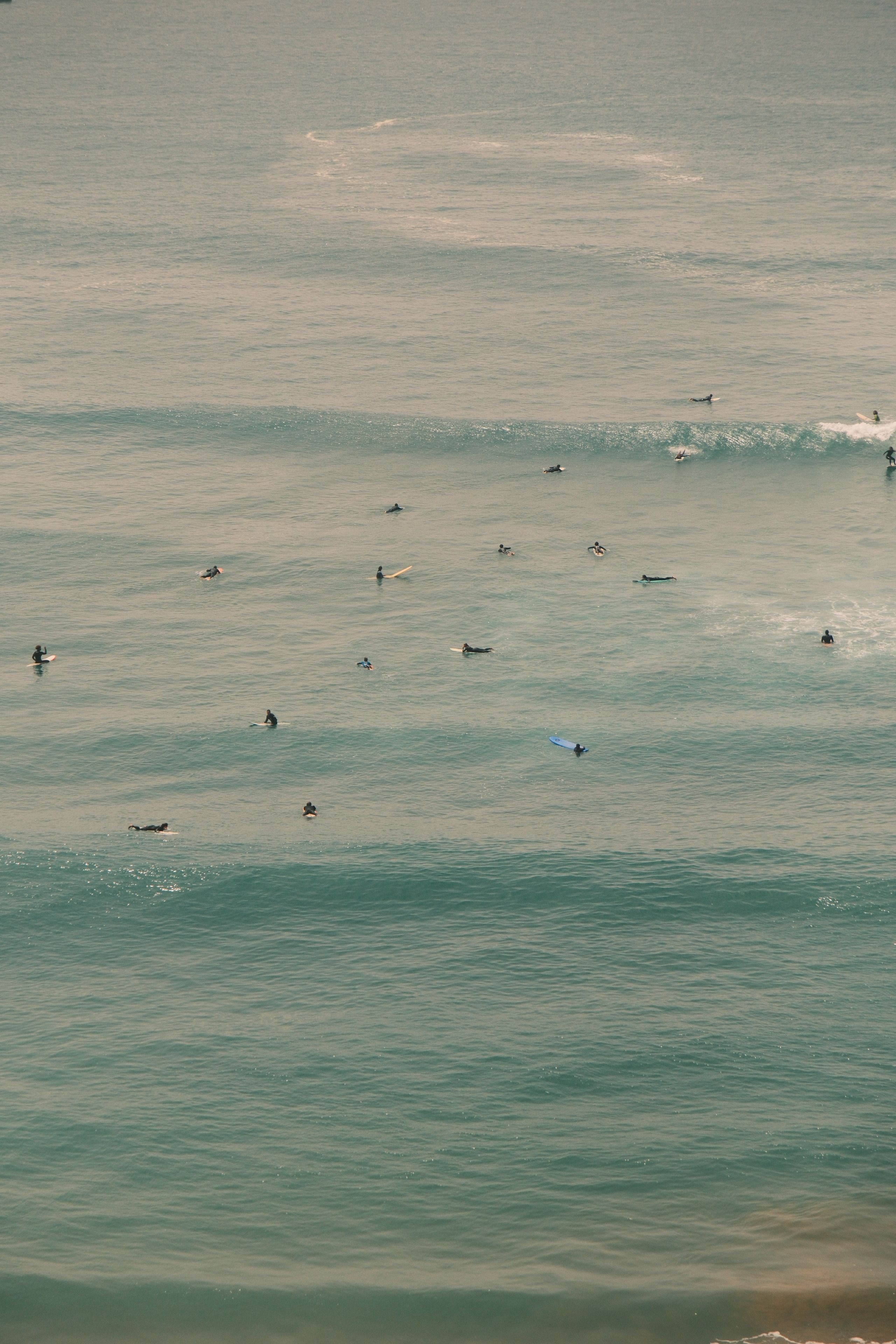
You are in two worlds here. There is the beach, and there is the village and the souk. Pack for both.
For the beach: two swimsuits so one can dry while you wear the other, a rash vest for sun and chafe, flip flops, and a quick-dry towel that is not the heavy one from your bathroom. A pair of old trainers or sandals you do not mind getting wet helps on the rocky entries at some spots.
For the village and the activities: Taghazout is a working Moroccan town, not a resort. Lightweight trousers or a long skirt, and tops that cover the shoulders, let you walk the souk and visit without a second thought. Mornings and evenings get cool from autumn through spring, so bring a hoodie or a light jacket. The rooftop in the evening is colder than you expect after a day in the sun.
If you join the fixed seven day activity cycle, you will want closed shoes for the quad rides and the Timlaline dunes, and sandals or water shoes for Paradise Valley, where you walk into cold green pools between gorge walls. One warm layer covers the dune evenings.
Sun protection that works in the water
The sun here is strong, and it is stronger than it feels with a sea breeze on your face. In the Agadir region the UV index reaches the extreme end of the scale in summer and stays high from spring through autumn. You will burn in the water before you notice.
Pack SPF 50+, a stick or zinc for your nose and lips, a cap or surf hat, and sunglasses with a strap for the walk down. A long-sleeve rash vest does more for your shoulders than any amount of cream reapplied with wet hands.
On reef-safe sunscreen: the chemicals oxybenzone and octinoxate are linked to coral damage, which is why some jurisdictions, Hawaii among the first, have banned their sale. Morocco has no such rule. The reasoning still holds in any ocean, so a mineral, reef-safe formula is the kinder choice and tends to stay on longer in the water anyway.
Travel documents and the health basics
The paperwork is simple. UK, EU and US citizens can visit Morocco without a visa for up to 90 days, and the passport needs to be valid for at least three months after your arrival date, per the UK government's entry requirements. Check your own country's rules if you hold a different passport, because the 90-day window is not universal.
Carry travel insurance that covers surfing, since some policies treat it as a hazardous activity and quietly exclude it. Bring any prescription medication in its original packaging with a copy of the prescription. A small first aid kit earns its place: plasters for reef cuts, painkillers, rehydration salts, and something for an upset stomach while your gut adjusts to new food and water. Drink bottled or filtered water.
Bring some cash in euros or pounds to change on arrival, because many small shops and the souk do not take cards, and Moroccan dirham is hard to get hold of before you land.
Tech and work gear for remote workers
Morocco uses the same European round-pin sockets and mains voltage you find across the continent. If you travel from the UK, the US or Australia, bring a European adapter. Most modern laptop and phone chargers handle the higher European voltage, but check the small print on anything with a motor or a heating element before you plug it in.
If you are coming to work as well as surf, we have a coworking space, and most remote workers still carry a backup for the days the connection wobbles. A local SIM with data, or a small portable hotspot, saves the morning you have a call and the cafe wifi does not cooperate. A power bank covers the afternoon excursions.
The rest is the usual: laptop, chargers, headphones, and a dry bag or waterproof pouch for your phone on the beach. Sand gets into everything, so a zip pouch for your electronics is worth the space.
The checklist you can copy
Surf and beach:
- 3/2mm wetsuit (only if bringing your own; otherwise we provide it)
- Two swimsuits and a rash vest
- Quick-dry towel
- Flip flops and old trainers or water shoes
- Booties only if your feet are rock-sensitive
Clothing:
- Lightweight trousers or skirt, shoulder-covering tops for the village
- Hoodie or light jacket for cool evenings
- Closed shoes for quad rides and dunes
- Sandals for Paradise Valley
Sun and skin:
- SPF 50+ reef-safe sunscreen
- Zinc stick and lip balm with SPF
- Cap or surf hat, sunglasses with a strap
- Aloe or after-sun
Documents and health:
- Passport valid three months past arrival
- Travel insurance covering surfing
- Prescriptions in original packaging
- Small first aid kit and rehydration salts
- Cash in euros or pounds to change on arrival
Tech and work:
- European plug adapter (Type C or E)
- Laptop, chargers, power bank
- Local SIM or portable hotspot
- Dry bag or waterproof phone pouch
Now that you know what fits in the bag, the next decision is the dates. Have a look at the best time of year to surf in Taghazout and pick the week that suits you. We will have the boards and wetsuits ready when you land.
Questions people ask
Do I need to bring my own surfboard to Morocco?
No. Boards and wetsuits are included in our surf packages, split by level. Bring your own board only if you have a shape you love, and expect an oversize baggage fee from your airline.
What wetsuit thickness do I need in Taghazout?
A 3/2mm full suit works for most of the year. In December, January and February a 4/3mm is kinder if you feel the cold. We provide wetsuits, so this matters mostly if you bring your own.
Do UK or US citizens need a visa for Morocco?
No. UK, EU and US passport holders can stay up to 90 days without a visa. Your passport must be valid for at least three months after the day you arrive.
Can I work remotely from the camp?
Yes. We have a coworking space, and most remote workers also carry a local SIM or a portable hotspot for a reliable backup connection.
What sunscreen should I bring?
SPF 50+ for a region where summer UV reaches the extreme end of the scale. Reef-safe formulas that skip oxybenzone and octinoxate are the kinder choice in the water.