
Home › Blog › Why Surf Taghazout: Morocco's Surf Hub
You surf Taghazout because one short stretch of coast holds enough breaks for a complete beginner and a seasoned regular to paddle out the same morning. You come for the water that stays warm while Europe freezes, and you stay for the town behind the beach. This is a working fishing village turned surf camp hub, 40 km north of Agadir, where the spot you surf is picked at breakfast from the forecast rather than printed on a brochure.
Here is the honest version of what that means for a week of your life.
The swell is consistent, and the bay forgives beginners
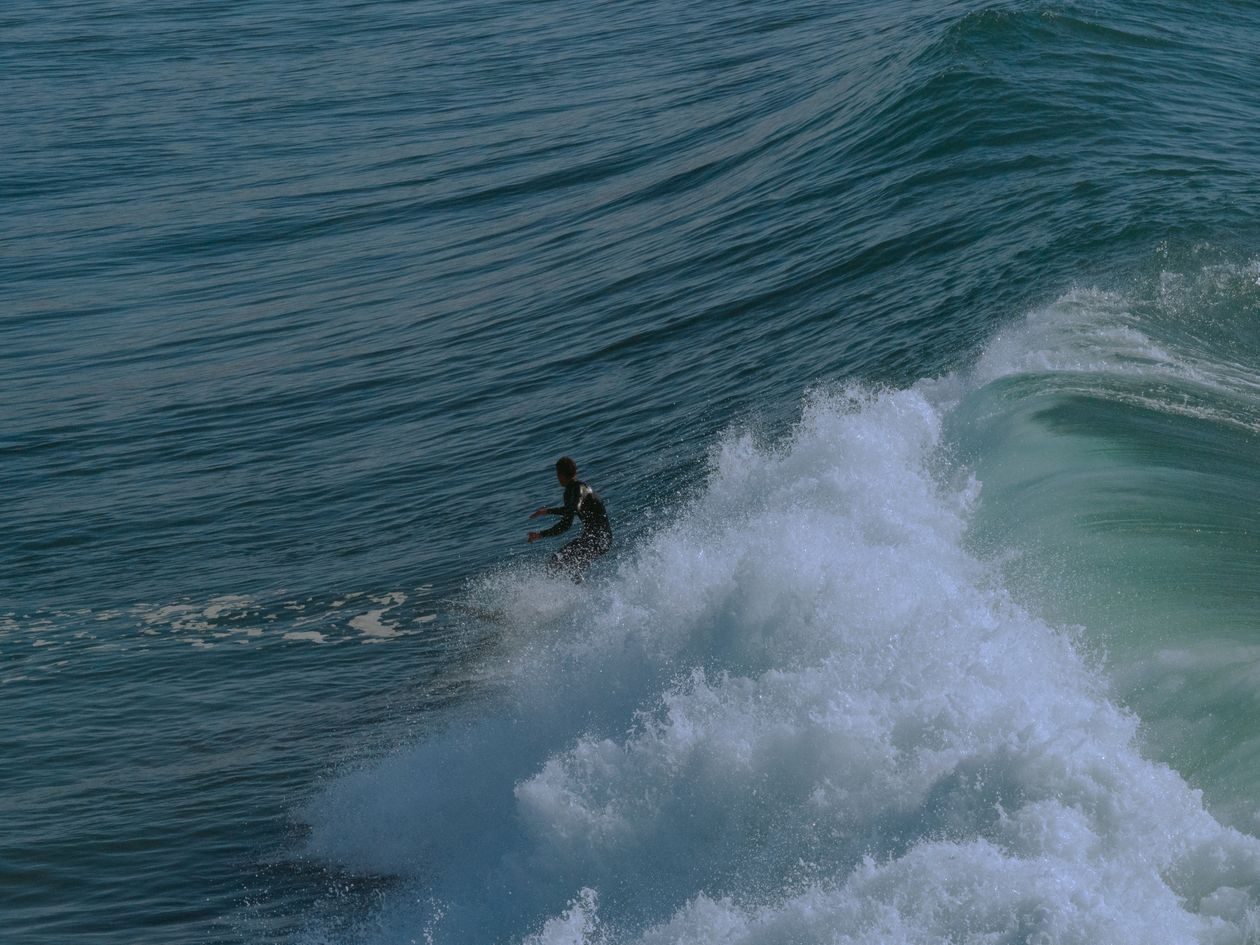
The North Atlantic feeds this coast. From October to March the swell arrives in steady lines, and the headlands bend it into long, peeling right-handers that let you ride for a while instead of a second. That is the shape beginners want. A wave that stands up slowly and walks along the point gives you time to get to your feet, time to think, time to make the mistake and recover from it.
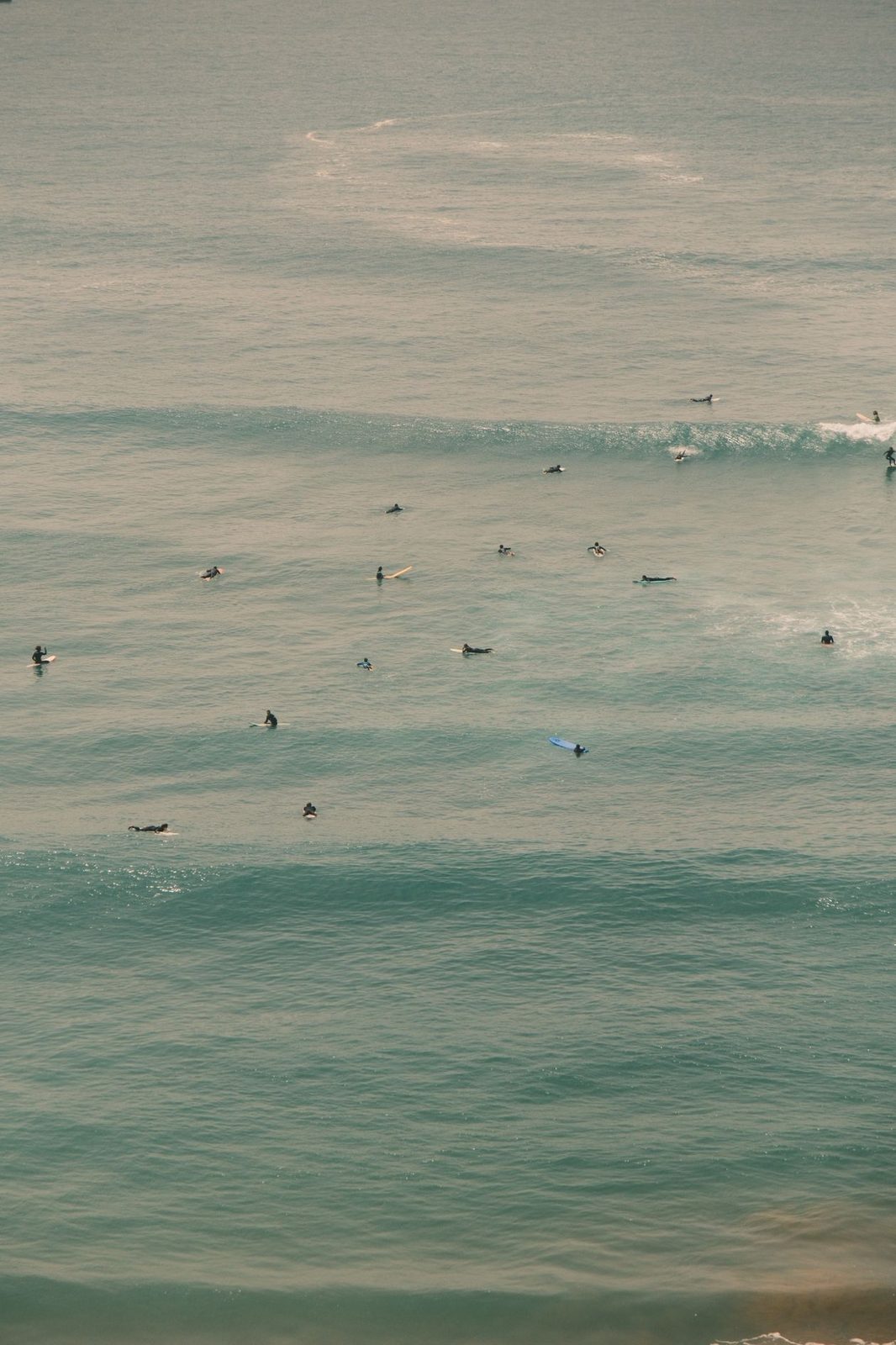
Point breaks like Anchor Point get the attention. They are not where you start. You start on a mellow beach break with a sandy bottom, in a group split by level, eight people maximum per certified coach, and the coach is in the water with you rather than watching from the sand. Sand is slower than water and hurts less, which matters on day one.
The intermediate and advanced surf sits a scooter ride away when the forecast lines up. You do not have to choose between a beginner-friendly bay and a serious wave. The coast gives you both.
Warm water in the European winter
This is the reason the camp fills from October onwards. While surfers in France and Portugal are zipping into thick rubber and gloves, the water here sits around 17°C. The average winter water temperature in Taghazout is about 17.1°C, roughly 16.5°C at its coldest in February and 17.8°C in December, according to independent sea temperature records. A 3/2 wetsuit carries you through the whole season.
That matters more than it sounds. Warm water and winter swell rarely share an address. Most places give you one or the other. Taghazout gives you big, clean North Atlantic waves and water you can actually stay in for two hours. The best months for swell, October through March, are also the months when being in the ocean stays comfortable.
We will not promise you waves on a specific date. The ocean decides that, and some mornings it decides to be flat. What we can promise is that this coast rarely stays flat for long, and that winter here is the opposite of winter at home.
Breaks for every level within one short scooter ride
Taghazout is not a single wave. The Stormrider surf guide lists 19 breaks in the region, from gentle beach breaks to the long point waves that put this town on the map. Eight of them are within easy reach of the camp.
That number is the whole argument for surfing here. Because the spots sit so close together, and because they handle swell and wind differently, there is almost always one that is working. A wind that ruins one point grooms the next one over. A swell too big for the beach is perfect for the reef.
This is why you find out at breakfast which spot you are going to. We read the forecast the night before and again in the morning, then we choose. We swap the day rather than cancel it. One address cannot do that. A town with eight breaks in reach can.
For a sense of how a full week is paced around the forecast, our guide to planning a surf holiday in Morocco walks through a typical seven days with the coaches who read the swell alongside you.
Culture, food and community the waves alone can't give
Waves bring you here once. Something else brings you back.
A surf trip is three or four hours in the water. The rest of the day is the town. Taghazout is a small Berber fishing village, 19 km north of Agadir, where the fish you eat at lunch came off a boat that morning. Tagines cook slowly in the clay pot they are named after. Mint tea is poured from height, on repeat, whether you asked for more or not.
Afternoons are where the week opens up. We run a fixed seven day activity cycle, the same every week of the year, so whatever date you arrive, the programme is already built. Quad bikes across the back country. Paradise Valley, a gorge of palm trees and cold green pools you can jump into. Souk El Had in Agadir, acres of spice, leather, olives and noise. A hammam that leaves you scrubbed to a new person. If an afternoon in the hammam sounds better than a quad bike, that is a legitimate choice. Watching from the edge with a coffee is also a legitimate activity.
Then there is the table. Meals here happen at long shared tables, which is how a solo traveller arrives alone on Sunday and leaves with a group on Saturday. Surf in the morning, adventure in the afternoon, eat together at night. The rhythm does the social work for you.
What a surf Taghazout surf camp actually looks like with us
Here is what sits under one booking, in one town, run by one team.
- Four addresses, one booking. A social hostel, private studios for couples, a coworking base for remote workers, comfort rooms for travellers who want their own space. You choose the bed. The surf and the activities stay the same.
- Surf split by level. Beginner and intermediate groups, eight people maximum per certified coach, spot chosen each morning from the forecast.
- A fixed weekly activity cycle. Quad rides, Paradise Valley, the souk, a hammam, the dunes, and more, the same every week of the year.
- Flexible stays. Surf packages from three nights. Stay and Chill and Stay and Work from two. Breakfast included on direct bookings and on packages.
- Getting out is handled. The Complimentary Departure Transfer to Agadir Al Massira Airport or Agadir Bus Station is included from five nights on packaged trips. The arrival transfer is not included. Plan your landing around that.
- Scooter rental and coworking on site. Reach the breaks on two wheels, work the morning and surf the afternoon, or the reverse.
Stays and packages can be cancelled free of charge up to seven days before arrival. Services booked on their own can be cancelled up to 48 hours before they start.
See why people keep coming back
Taghazout works because the swell is reliable, the water is warm when it counts, the breaks are close enough to chase the best one, and the town gives you a reason to stay out of the water too. That combination is rare. Most surf destinations have the wave and nothing else, or everything else and a mediocre wave.
Pick your dates and we will read the forecast for you. Build your own trip or start from one of our ready-made packages, and the first spot gets chosen the morning you paddle out.
Questions people ask
When is the best time to surf in Taghazout?
October to March brings the most consistent North Atlantic swell and the biggest, cleanest days. Summer is smaller and better for first lessons. We surf year round because the coast rarely goes flat.
Is Taghazout good for complete beginners?
Yes. The bay has mellow, long peeling rights and a sandy beginner beach a short drive away. We split beginners into their own group, eight people maximum, with the coach in the water with you.
How cold is the water in winter?
The average winter water temperature in Taghazout is about 17°C, roughly 16.5°C in February and 17.8°C in December. A 3/2 wetsuit is comfortable through the season.
How far is Taghazout from Agadir airport?
Taghazout is 40 km from Agadir Al Massira Airport, about a 45 minute drive. The Complimentary Departure Transfer to the airport or Agadir Bus Station is included from five nights on packaged trips.
How many surf spots are near Taghazout?
The Stormrider surf guide lists 19 breaks in the Taghazout region. Eight of them are within easy reach of the camp, which is why we choose the spot each morning from the forecast.