
Home › Blog › Best Surf Camps in Taghazout for Every Budget
Pick a camp on three things: who coaches you in the water, how far your bed is from the break, and what the price actually covers. Everything else, the rooftop, the long tables, the branded hoodie, is secondary to those three. Taghazout has camps at every price point, and most of them surf the same eight breaks within reach of the village. So the waves are rarely the thing that separates them.
This guide walks you through how to compare surf camps in Taghazout without getting lost in the marketing. We cover coaching quality, location, food and vibe, the budget tiers and who each one fits, the questions to ask before you pay a deposit, and the red flags that should make you close the tab.
Morocco is busier than it has ever been. The country recorded 17.4 million tourists in 2024, a 20% jump on the year before, according to the Morocco Government Portal. More travellers means more camps, which is good for choice and bad for clarity. A clear head helps.
How to compare camps: coaching, location, food and vibe
Start with the coaching, because it is the one thing that decides whether you improve. The number that matters is the group size. Eight people maximum per certified coach, split by level, beginner and intermediate. Ask whether the coach is in the water with you or watching from the sand with a whistle. In the water is the answer you want. A coach who paddles out catches the moment you popped up too early and tells you before the next wave, not at lunch.
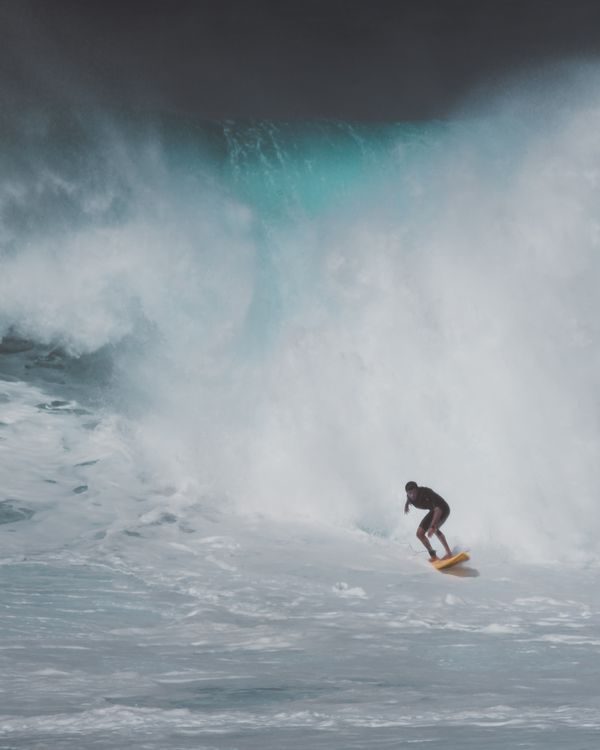
Location is the second filter. The closer your bed is to the break, the more surfing you do and the less time you spend in a van. Taghazout sits among eight breaks within reach, from mellow beach whitewater for first-timers to the long right-hand points that drew surfers here in the first place. The spot is chosen each morning from the forecast, so you find out at breakfast which break you are heading to. A camp a short walk from the water can change plan on the day. A camp an hour inland cannot.
Food and vibe are where camps actually differ, so weigh them honestly. Some camps run long communal tables where strangers become a crew by day two. Others are quieter, better for couples or anyone who wants to work in the afternoon and surf in the morning. Neither is better. They are different weeks. If you are travelling alone and want company, the social setup matters more than the thread count of the sheets, so read what the camp says about shared meals and common space before you book.
Budget, mid-range and comfort: who each tier fits
Every tier in Taghazout surfs the same ocean. The price buys you a room, a standard of food and a group size, not better waves.
Budget. Shared dorms, simple breakfasts, a lively social scene. This is the hostel end of the market, and it suits backpackers and first-time surfers who want to meet people and keep costs low. You trade privacy for price and company.
Mid-range. Private or twin rooms, breakfast included, a surf programme that splits beginners from intermediates. Most travellers land here. It is the sweet spot for couples, small groups and anyone who wants a real bed after a morning in the water. You get the social side without the dorm.
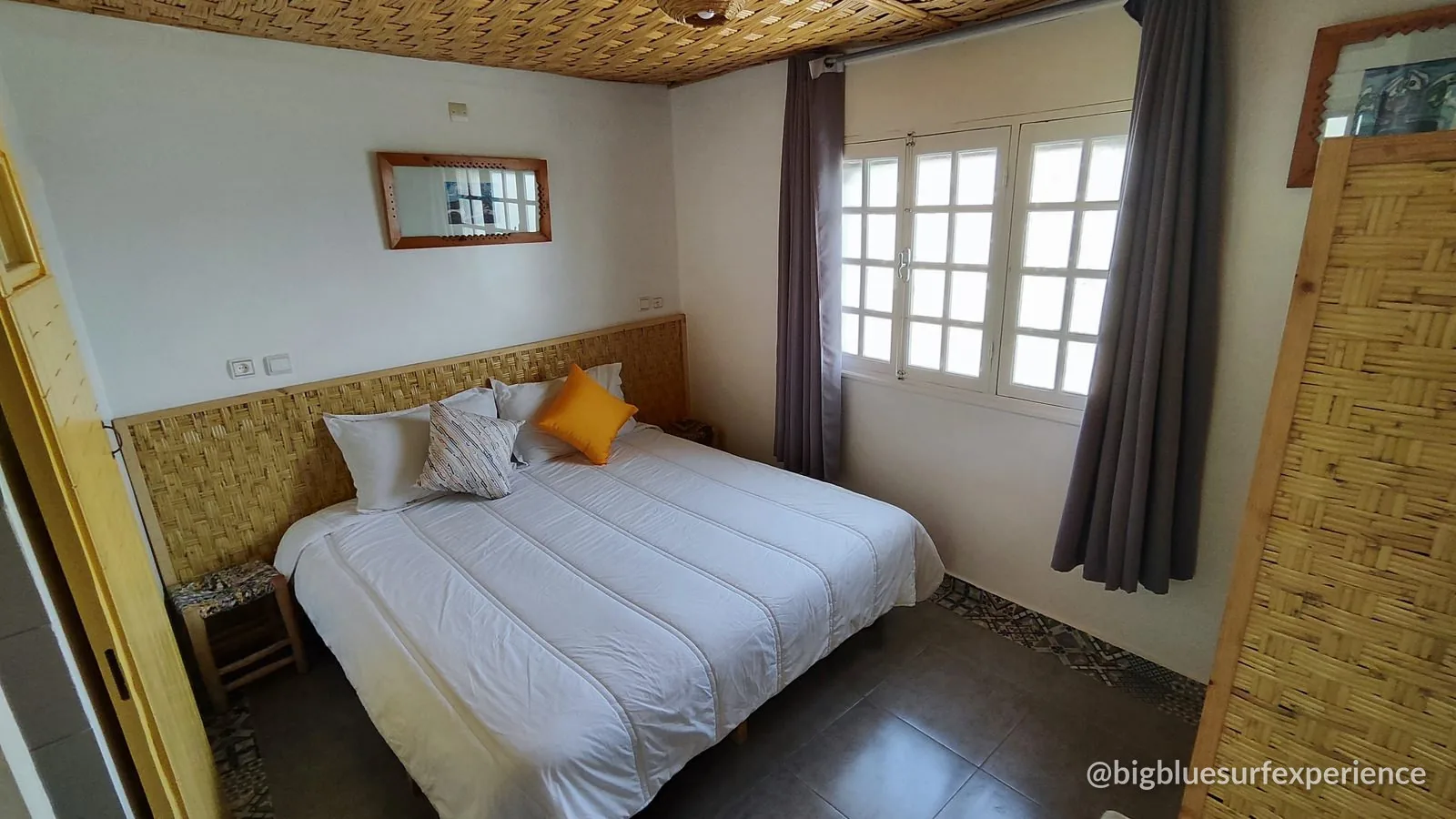
Comfort. Private studios, better food, more space, often near the beach. This suits couples, remote workers who need a desk, and anyone treating the week as a reset rather than a party. You pay for quiet and for your own four walls.
For real numbers across these tiers, our Taghazout surf camp prices guide breaks down what to budget this year. Prices move with the dates and the room, so treat any single figure you see online as a starting point, not a quote.
Big Blue Surf Experience runs four accommodations under one booking, from shared social stays to private studios, with its own surf school coaching every level. That means you can pick your tier without switching operators, and the coach is the same whether you booked a dorm bed or a studio.
The questions to ask before you pay a deposit
A good camp answers these without hesitating. A vague answer is itself an answer.
- How many people per coach, and how are groups split? You want eight maximum, divided by level. If they cannot give you a number, assume it is high.
- Exactly what is included? Get it in writing. Breakfast, board and wetsuit hire, transfers, lessons per day. Know what you are paying extra for before you arrive, not at checkout.
- How far is the accommodation from the break? Minutes, not adjectives. "Close to the beach" means nothing. "A ten minute walk" means something.
- What is the cancellation policy? Plans change and swells do not read calendars. Know the terms before money leaves your account.
- Which breaks do you use for my level? A camp that coaches beginners and intermediates should name the spots it uses for each. If it only talks about one wave, ask what happens when that wave is flat.
On cancellation specifically, read the fine print. At Big Blue, stays and packages can be cancelled free of charge up to seven days before arrival, and services booked on their own up to 48 hours before they start. That is the kind of plain term you want from any camp, stated in numbers rather than vibes.
Red flags: vague inclusions, huge groups and far-from-the-break stays
Three things should make you hesitate.
The first is vague inclusions. If a camp will not tell you in writing what the price covers, the gaps tend to appear as extras once you are there. Boards, wetsuits, transfers and the number of coached sessions per day should all be spelled out. A camp confident in its offer has nothing to hide in the small print.
The second is a huge group. Some camps pack twelve or more surfers around one coach to keep the price down. You spend the session queuing for a wave and the coach spends it shouting from the beach. Eight per coach, in the water, is the line. Below it you improve. Above it you mostly wait.
The third is a stay far from the break. A cheap bed an hour inland stops being cheap once you count the time lost in a van twice a day. The whole point of Taghazout is that the surf is close. A camp that puts you far from it is selling you a commute.
One more, quieter red flag: a camp that guarantees waves, weather or a specific spot. No honest operator can. The ocean decides. A good camp swaps the day rather than cancels it, and tells you so.
Why the brand name tells you the least
Plenty of travellers start by typing a single camp name into Google. Searching a name you have heard somewhere is a reasonable first move. It just should not be the last one. A logo tells you nothing about the group size, the distance to the break or what breakfast looks like. Whatever brand you start with, run it through the same three filters: coaching in the water, a bed near the waves, and inclusions in writing. The name on the hoodie is the least useful thing on the page.
Weigh the shortlist, then pick the week that matches your level
By now your shortlist should be short. Cross off anything with a vague inclusions list, a group bigger than eight, or a bed far from the water. What is left is a choice between tiers, and that comes down to your budget and how you want the week to feel.
Match the camp to your level, not just your wallet. First-timers want gentle whitewater and patient coaching. If you already surf and want to progress on the points, an intermediate surf camp in Taghazout is the brief to read. The season helps here too: October to March brings the most consistent North Atlantic swell, and you can check conditions for any date on the independent Surfline Taghazout guide.
When your shortlist is down to one, pick your dates and build your trip around the week you want. The waves will be the waves. The camp you choose decides everything else.
Questions people ask
How much does a surf camp in Taghazout cost?
It depends on the dates, the room and the length of stay. Budget beds in shared rooms sit at the bottom, private studios near the beach at the top, and most travellers land in the mid-range. Ask for a full breakdown of what the price includes before you compare numbers.
What group size should I look for in a Taghazout surf camp?
Eight people maximum per certified coach, split by level. Any bigger than that and you spend more time waiting than surfing. The coach should be in the water with you, not watching from the sand.
Is there only one surf camp option in Taghazout?
No. Taghazout has many camps across every budget. Starting from a single name you have heard is fine, but compare coaching quality, distance to the break and the exact inclusions before you decide.
When is the best time to surf in Taghazout?
The main season runs October to March, when North Atlantic swells hit the points most consistently. Summer is smaller and gentler, which suits first-timers. The spot still changes each day with the forecast.
Do I need to be experienced to join a surf camp in Taghazout?
No. Camps split groups by level, so beginners learn on the sand and in the whitewater while intermediates chase the points. Pick a camp that coaches both and ask which breaks it uses for your level.