
Home › Blog › Souk El Had Agadir: A First-Timer's Guide
Souk El Had Agadir is the biggest market in southern Morocco, with more than 6,000 shops packed behind 13 numbered gates. You come for spices, argan oil, leather and produce, you stay because the whole thing is a working city inside a wall. This guide tells you when to go, which gate to pick, what to buy and roughly what to pay.
Here is the first thing to get right. The souk is closed every Monday. It opens Tuesday to Sunday, 9am to 8pm (Souk El Had official site). Turn up on a Monday and you will stand at a locked gate wondering what you did wrong.
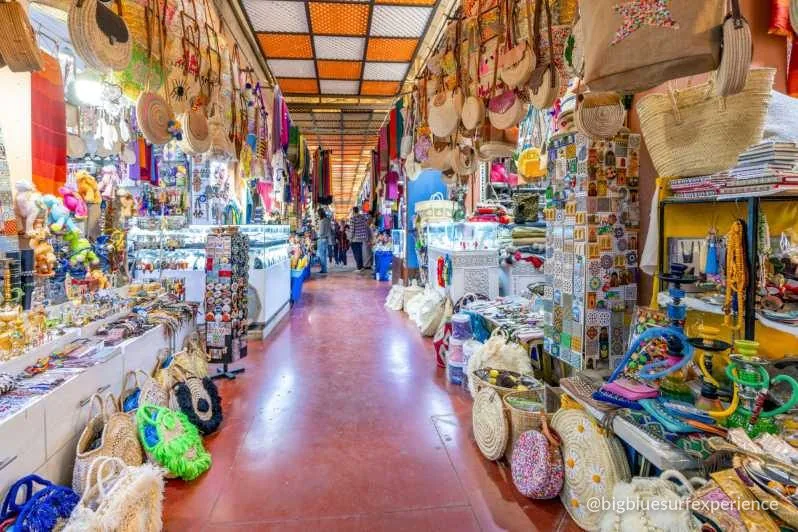
What to expect inside Souk El Had Agadir
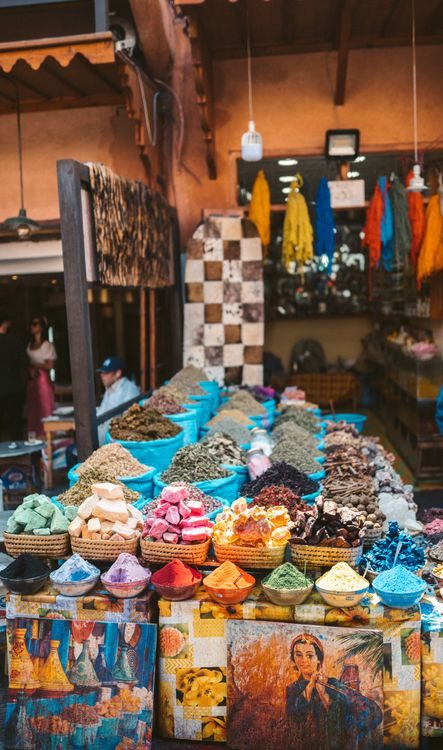
It is loud, close and full of colour. Spice pyramids in reds and ochres. Sacks of cumin, saffron and ras el hanout open at the neck. Bottles of argan oil, pressed down the road. Leather babouches stacked by size, hanging carpets, trays of olives and dates, a wall of scarves, a man soldering a lamp.
The market covers more than 11 hectares. That is a lot of ground. You will not see all of it, and you do not need to. The trick is to pick a corner and wander it properly rather than trying to cover the whole thing at a jog.
Smell does most of the navigating. The food sections hit you first: herbs, mint, cured olives, bread. Deeper in you find the craft stalls, the leather, the pottery, the jewellery. It is busy with locals doing their weekly shop, not just travellers, which is exactly why it is worth the trip.
Best gates to enter, and when to go
There are 13 numbered gates, and each opens onto a different part of the market. You do not need to memorise them. Pick a gate, note the number, and use it as your way back out. The souk swallows your sense of direction within minutes, so your entry gate is your anchor.
Go mid-morning. Get there not long after 9am and the produce is fresh, the light is good and the aisles are not yet full. Weekends are busier. If you want room to look and time to haggle, a Tuesday to Thursday morning is calmer than a Saturday afternoon.
Give yourself two hours as a minimum. One hour is a lap. Two hours is enough to find a few things, drink a mint tea, and leave without feeling you rushed it. Watching the market go by from the edge with a coffee is also a legitimate activity.
How to haggle without the stress
Haggling here is normal and expected on crafts, leather and souvenirs. The rhythm is simple. The seller names a price, you counter low, you meet somewhere in between. A common opening is to offer roughly half of the first asking price, then settle above that.
A few things keep it easy. Decide what the thing is worth to you before you open your mouth. Stay friendly, it is a conversation, not a fight. Be ready to walk, and mean it. If the price is right you will be called back, and if it is not, you saved your money.
One rule changes everything: fresh food and spices are usually priced as marked, not negotiable. Save the back and forth for the carpet, not the kilo of dates. Carry small cash in a mix of notes. Agree the price out loud before anything is weighed, wrapped or cut.
What to actually buy
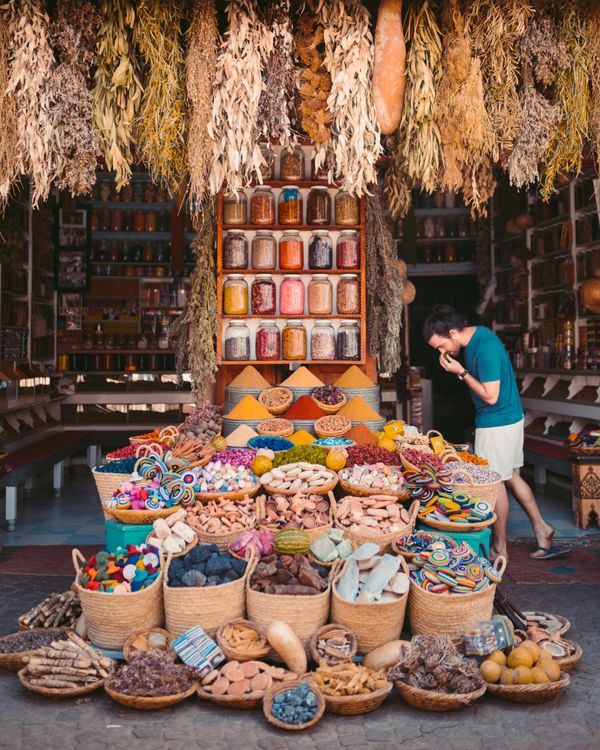
Argan oil is the local one to get. It is pressed in this region, and you can find both the cosmetic oil for skin and the culinary oil for food. Buy sealed bottles, smell before you pay, and expect the culinary version to taste nutty and toasted.
Spices are the easy win. Saffron, cumin, cinnamon, and ras el hanout, the house blend that changes from stall to stall. Buy a small amount of a few rather than a huge bag of one. They travel well and cost little.
Leather babouches, woven baskets, ceramics and lamps are the classic takeaways. Look closely at stitching and finish, since quality varies stall to stall. For food to eat now, the olives, dates and fresh bread are hard to beat. We will not quote firm prices here, because they move with the season, the stall and your haggling. Decide your own ceiling and hold it.
How the souk fits a Feel Alive afternoon
We surf in the morning. The ocean sets that clock, and you find out at breakfast which of the breaks within reach we are heading to that day. The afternoon is where the Feel Alive programme lives, the fixed seven day cycle of Moroccan activities that runs the same every week of the year. A souk run slots straight into one of those afternoons.
The logistics are kind. Taghazout to Agadir is about 20 to 24 km down the coast road, roughly 20 to 35 minutes by car. You surf, you eat, you head to the souk while it is still open, and you are back for dinner. If you would rather go under your own steam, a rented scooter makes the trip simple. See our notes on scooter rental in Taghazout before you ride.
The souk is one stop in a wider week that also takes in Paradise Valley, the dunes, the quads and a hammam. Morning in the water, afternoon in the market, long table at night. That is the shape of it.
Build your trip and slot a souk run in
A good souk visit is short on rules. Avoid Monday. Arrive mid-morning. Pick a gate and remember its number. Open at around half the first price on crafts, pay the marked price on food, and keep small cash to hand. Do that and you walk out with argan oil, a bag of spice and a story, not a headache.
If you are still shaping the week around it, pick your dates and build your trip, pairing morning surf with the afternoons that suit you. Our guide on how to book your Taghazout surf package walks you through it, and the souk is one of the afternoons waiting for you when you land.
Questions people ask
Is Souk El Had Agadir open on Mondays?
No. The souk closes every Monday for maintenance. It opens Tuesday to Sunday, 9am to 8pm. Plan your visit for any other day of the week.
How do I get from Taghazout to Souk El Had?
It is about 20 to 24 km down the coast, 20 to 35 minutes by car, scooter or taxi. We run surf in the morning, so the souk sits well in the afternoon.
How much should I haggle at the souk?
On crafts, leather and souvenirs, start at about half the first price and settle somewhere above that. Fresh food and spices are usually fixed.
Is Souk El Had safe for first-time visitors?
Yes. It is a busy, working market used by locals every day. Keep your bag zipped, carry small cash, and agree a price before anything is weighed or wrapped.