
Home › Blog › Taghazout Surf School: Meet Your Coaches
At our Taghazout surf school, the people who teach you are local. They grew up on this coast, they read the tide and the swell in one glance, and they can tell from a single pop-up on the sand what you need to fix. That is the short version. Here is what it actually looks like, from the first briefing on the beach to your first green wave.
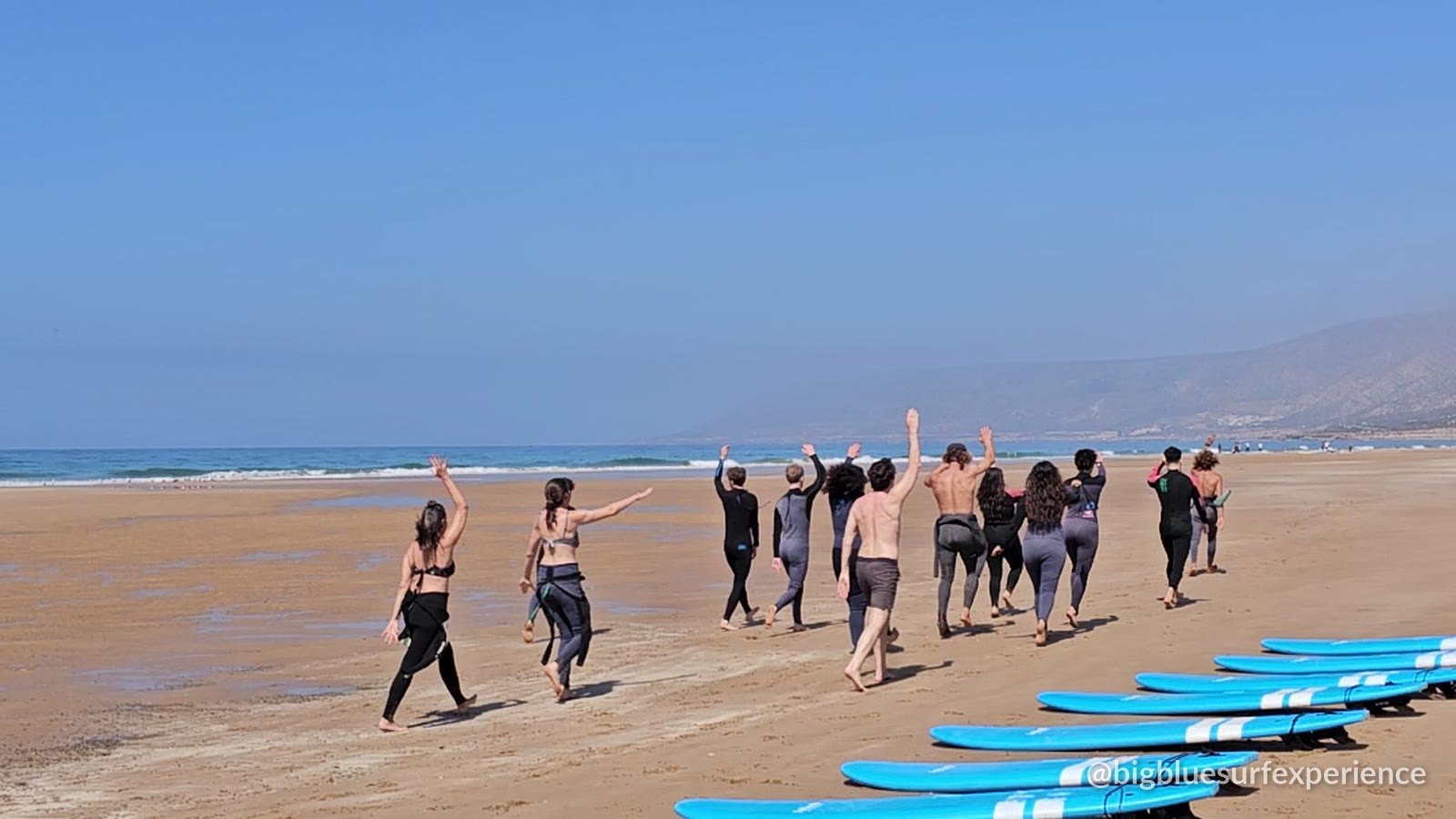
We run groups of eight maximum per certified coach, split by level. The coach is in the water with you. Not on the beach with a whistle. In the water, close enough to turn your board and tell you to paddle.
The spot changes, because the ocean changes
Your coach picks the spot each morning from the forecast. You find out at breakfast which break you are going to. There are eight breaks within reach of Taghazout, and the right one on any given day depends on the tide, the size of the swell and the level of your group.
This matters more than any timetable. A beginner needs a gentle beach break with slow, already-broken waves. An intermediate wants a point with a shoulder to turn on. On the same morning those can be two different beaches twenty minutes apart. So we do not promise a spot in advance. We read the water and we go where it works.
Naming a few helps you picture it. Panorama is a long, forgiving beach break that suits first timers and improvers. Croco sits a little further and offers cleaner walls when the swell lines up. Which one you surf is a decision made that morning, not a line on a brochure. If you want the full map of what is around, our guide to the top surf spots near Taghazout walks through each break and when it works.
What a lesson looks like, start to finish
A lesson starts on the sand, not in the sea. The coach checks the conditions, talks to the lifeguard, and hands out the right board for each person. Then comes the briefing: where the rip is, how to carry the board, how the leash recoils, and the pop-up, practised on dry sand until the movement is yours. Sand is slower than water and hurts less.
Then you paddle out to the whitewater. These are waves that have already broken, so they push you gently toward the beach. The coach stands beside you, lines up your board, and calls when to paddle. You catch the foam, you find your feet, you ride it in. You do it again. This is where most of the first session goes, and it is where most beginners stand up for the first time.
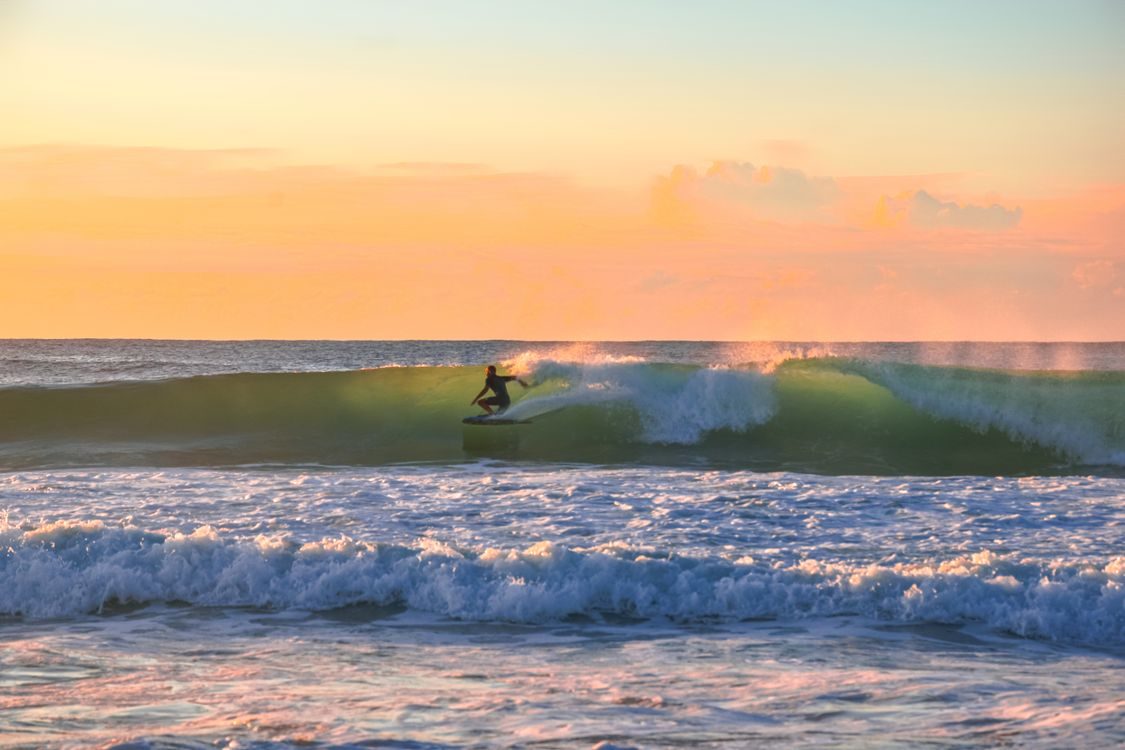
Standing on whitewater is the start, not the finish. Once your pop-up is steady and you can time a paddle, the coach takes you a little further out toward unbroken, green waves. That is a different feeling: faster, cleaner, the wave doing more of the work. Getting there is the point of the week. For a closer look at the moment itself, read how to stand up surfing on your first wave.
Group sizes and the ratios we actually hold to
Eight people maximum per coach, split by level. We hold to that because the number is the safety.
The International Surfing Association, the sport's governing body, sets a maximum coach-to-student ratio of 1:8 in good conditions and recommends groups of six to eight for the best balance of safety and progression (International Surfing Association, Obligations of a Registered Surfschool). When the ocean turns, that number has to come down, and reading the ocean is exactly what a local coach does before anyone paddles out.
We split beginner and intermediate into separate groups for a reason. A wide range of ability in one group means the coach is pulled in two directions, and someone gets less attention in the active surf zone. Keeping levels apart means the beginner gets slow waves and close supervision, and the intermediate gets pushed on the breaks that suit them. Eight people, one coach, one level, one plan for the session.
Boards, and how they change across the week
Beginners start on soft, high-volume boards. They are stable, they float you, and they catch slow waves easily, which is what you want while the pop-up is still new. The coach allocates the board to the person, not the other way around.
As your pop-up steadies and you start making the whitewater reliably, the board gets smaller and the waves get greener. This progression is not a fixed schedule. It happens when you are ready, and the coach decides that from what they see in the water. Some people move down a board size inside three days. Others take the week. Both are normal, and neither is a problem.
Video feedback on the rooftop
In the afternoon, back at the house, the coach pulls up the clips. You watch yourself on the rooftop and see what the coach saw.
Video is the fastest way to fix a pop-up. You feel like you are standing straight; the screen shows your weight is back and your front foot landed late. One look and the correction makes sense in a way that a shouted tip in the water never quite does. The next morning you take that one fix to the beach. Small changes, watched and named, add up fast across a week. Watching from the edge with a coffee is also a legitimate activity.
Who the coaches are at our Taghazout surf school
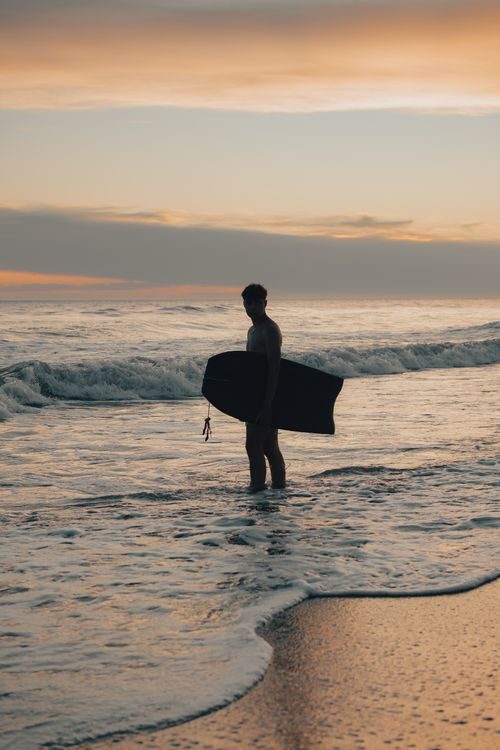
Every coach here is certified and local. Certification means they know the safety side: the rip currents, the leash, the briefing, the ratios. Local means they know this coast in a way no course can teach. They know which break turns on at which tide. They know where the rocks sit at low water. They have surfed these waves their whole lives.
That combination is the whole point of a local Taghazout surf school. You are not being taught from a manual. You are being read, in the water, by someone who can see your next mistake before you make it, and who picked the spot that morning to give you the best chance of a good wave.
Pick your dates and lock your first week
The ocean decides a lot here. We decide the rest: the spot each morning, the board in your hands, the size of your group, the coach in the water beside you. Surf packages run from three nights, and the week of coaching is the same honest structure whether you come for three days or seven.
If you are weighing up when to come and what the week holds, the next step is simple. Pick your dates, choose a package or build your own, and we will put you with a coach and a group at your level. Your first green wave is closer than it looks.
Questions people ask
Do I need to speak French or Arabic to take a lesson?
No. Our coaches teach in English, and the briefing on the beach covers everything you need before you paddle out. Most of our guests are foreign travellers learning to surf for the first time.
How many people are in a surf group?
Eight people maximum per certified coach, split by level into beginner and intermediate. The coach is in the water with you the whole session, not watching from the beach.
Which spot will we surf?
The coach chooses the spot each morning from the forecast. There are eight breaks within reach, and the right one depends on the tide, the swell and your level that day. You find out at breakfast.
Will I actually stand up on my first day?
Most beginners stand on a broken wave in the first session. Standing on whitewater is the start. Catching green waves comes later in the week, once the pop-up is steady and you can read the wave.
Can I surf if I have never been in the ocean?
Yes. We start on the sand with the pop-up, then move to whitewater where the waves are already broken and gentle. Sand is slower than water and hurts less, so you practise the movement before you need it.